English
 French
 German
 Spanish
 Portuguese
 Italian
 Hindi
Hindi


 You have saved
$0.00
!
You have saved
$0.00
!


I've spent the last year testing product samples from suppliers who claim their items have perfect Amazon ratings.
The leather jacket that arrived as PU material had 4.8 stars and 2,000+ reviews.
That's when I realized the rating system isn't just broken. It's actively misleading budget-conscious shoppers who can't afford to waste money on products that look good on screen but fall apart in real life.
Here's what I've learned from rejecting hundreds of products that Amazon's algorithm would happily recommend to you.
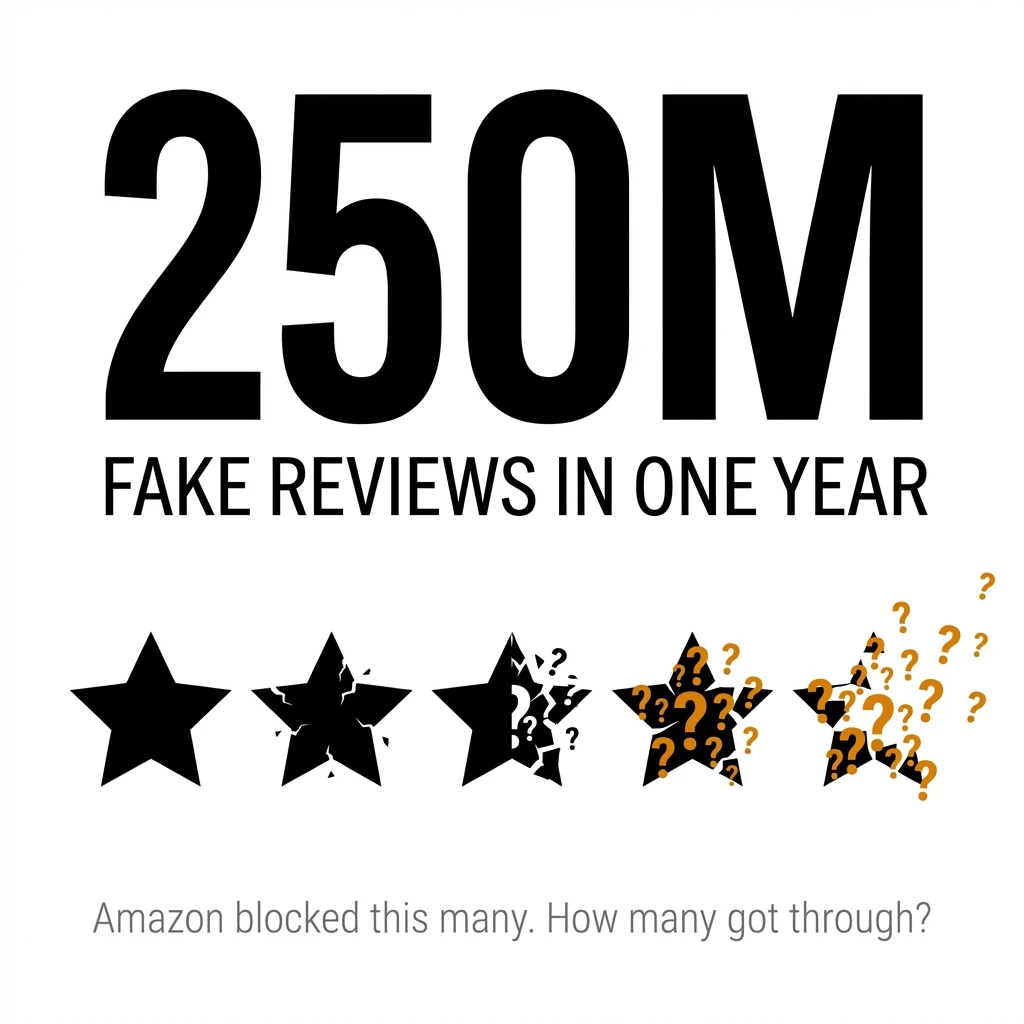
Amazon blocked over 250 million suspected fake reviews in 2023 alone.
That's not a typo. 250 million.
And that's just what they caught. Research suggests up to 16% of Amazon's 250 million reviews may be fake or manipulated, with some studies projecting that number could hit 45% by 2025.
The pattern is clear: 46% of identified fake reviews are 5 out of 5 stars. These aren't random. They're strategic.
Fake positive reviews boost product sales by 12.5% in the first two weeks. In a 5-star system, one additional fraudulent star increases demand by 38%.
When I'm vetting suppliers, I see this constantly. Products with suspiciously perfect ratings often share the same small pool of reviewers. That's because sellers buying fake reviews rely on a limited number of paid reviewers who review multiple manipulated products.
Regular products get reviews from millions of dispersed Amazon customers. Manipulated products show tight clustering patterns that you can spot if you know what to look for.
Fake reviews cost consumers $0.12 on every dollar spent in 2025.
That adds up to $787.7 billion in unwanted purchases globally. The average consumer wastes $125 per year buying products based on fake reviews.
But here's what makes this worse: shoppers can't detect fake reviews.
While 85% of consumers suspect reviews are fake "sometimes or often," research shows they do poorly at identifying specifically which products use them. Only 24% of consumers in 2025 were confident they spotted a fake review.
I test physical samples before listing anything. When suppliers send me specs that say "genuine leather" and I receive PU material, I know the disconnect between what's promised and what's delivered.
You don't have that luxury when you're shopping online. You're trusting a star rating that might be built on a foundation of paid reviews, low expectations, or shipping complaints that have nothing to do with product quality.
Amazon allows product reviews to include shipping complaints, seller issues, and delivery problems.
I've seen sellers receive 1-star and 2-star product reviews where customers explicitly state "the pieces themselves are good quality" but Amazon's delivery failed.
Amazon won't remove these reviews. They won't strike them through. They permanently damage product ratings for issues that have nothing to do with the actual product.
This creates a harsh penalty for quality products. Products with 4 stars enjoy 10% higher sales conversions than products with 3.9 stars. That 0.1-star difference can kill a good product's visibility.
Meanwhile, consumers are 21% more likely to leave a review after a negative experience than a positive one. Negative reviews accumulate faster than positive ones, which means genuinely good products get buried under complaints about things the manufacturer never controlled.
When I evaluate products for listing, I look past the star rating entirely. I check:
The leather jacket that arrived as PU would have passed Amazon's review system with flying colors. It failed my first checkpoint.
Research shows consumers only leave reviews on 1-4% of purchases.
That means most reviewers are either extremely satisfied or extremely disappointed. You're not getting the middle ground. You're getting the extremes.
This creates a bimodal distribution that doesn't reflect typical user experience.
I see this in supplier samples constantly. A product might work fine if you expect very little. If you've never owned a quality version of that item, the cheap knockoff seems amazing.
But if you're comparing it to the real thing, the difference is obvious.
The 5-star reviews come from buyers with rock-bottom expectations. The 3.5-star reviews come from buyers who've owned better products and can spot the gaps.
Amazon's algorithm can't tell the difference. It just sees stars and weights them equally.
Here's the uncomfortable truth: Amazon would slightly lose revenue if it eliminated fake reviews and all attendant misinformation.
Research from Wharton found that while platform revenue increases with consumer trust, it also increases with misinformation. That creates a conflict of interest.
Amazon makes money when you buy things. Fake reviews make you buy things. The math is simple.
They'll run crackdowns and issue press releases about blocking millions of fake reviews. But the fundamental incentive structure remains unchanged.
I don't have that conflict. When I reject a product, I'm protecting my reputation and your wallet. When Amazon shows you a 5-star product with fake reviews, they're protecting their commission.
You can't eliminate the risk entirely, but you can reduce it.
Look for these patterns:
Review clustering – Do multiple 5-star reviews use similar phrasing or appear within days of each other?
Reviewer history – Click on reviewers. Do they review dozens of unrelated products in short timeframes?
Verified purchase badges – Amazon weights these higher, but many legitimate reviews come from repeat customers who didn't buy through that specific listing.
Negative review content – Are complaints about shipping and sellers, or about the actual product quality?
Photo evidence – Real users post photos showing the product in use. Fake reviewers often skip photos or use stock images.
Rating distribution – A product with 90% 5-star reviews and 10% 1-star reviews (nothing in between) is suspicious.
When I'm vetting suppliers, I apply the same skepticism to their claimed ratings that you should apply when shopping.
The difference is I can demand physical samples and test them against specifications. You're making decisions based on digital information that might be completely fabricated.
82% of consumers encounter fake reviews at least once over 12 months.
You're not imagining it. The system is broken.
Budget-conscious shoppers get hurt the most because you can't afford to waste money on products that don't deliver. You need the rating system to work.
But it doesn't.
I built my product vetting process because I got tired of seeing the disconnect between what suppliers claimed and what they delivered. The leather jacket that arrived as PU material wasn't an exception. It was the rule.
Every product I list goes through authenticity verification, quality assurance, compliance review, and customer experience evaluation. If it doesn't pass all four checkpoints, it doesn't get listed.
That's the filter Amazon should be running but can't because their incentive is volume, not quality.
The 5-star products look perfect until they arrive at your door and fall apart. The 3.5-star products get dinged for shipping delays and angry customers who expected magic.
The rating system isn't helping you find good products. It's helping sellers move inventory.
You deserve better than that.
The next time you're comparing products on Amazon, remember this:
The 5-star rating might be built on fake reviews, low expectations, or paid incentives.
The 3.5-star rating might include complaints about shipping delays, seller issues, and delivery problems that have nothing to do with product quality.
Amazon's algorithm can't tell the difference. It just sorts by stars and shows you what drives the most sales.
I can't fix Amazon's review system. But I can apply the same quality checkpoints I use for supplier vetting to help you find products that actually deliver on their promises.
Because when you're shopping on a budget, you can't afford to gamble on ratings that might be completely fake.
You need someone doing the detective work so you don't have to.





You need to Sign in to view this feature

This address will be removed from this list